Final Fantasy · Evanescence
Hironobu Sakaguchi and Motonori Sakakibara, the world of Final Fantasy and Bring Me to Life: good and evil, worlds to save and the possibility of changing the course of events.
This is where English or… Nothing! takes shape as a project: English, music, images and live performance become one language for exploring the choices that reveal who we are.
No period web landing page is preserved for 2013. This page has been created today from the original materials used to prepare the first edition.
← Back to archiveThe experiences begun in 2010 had already shown how music, literature, cinema and contemporary culture could make English something to use, not simply something to study.
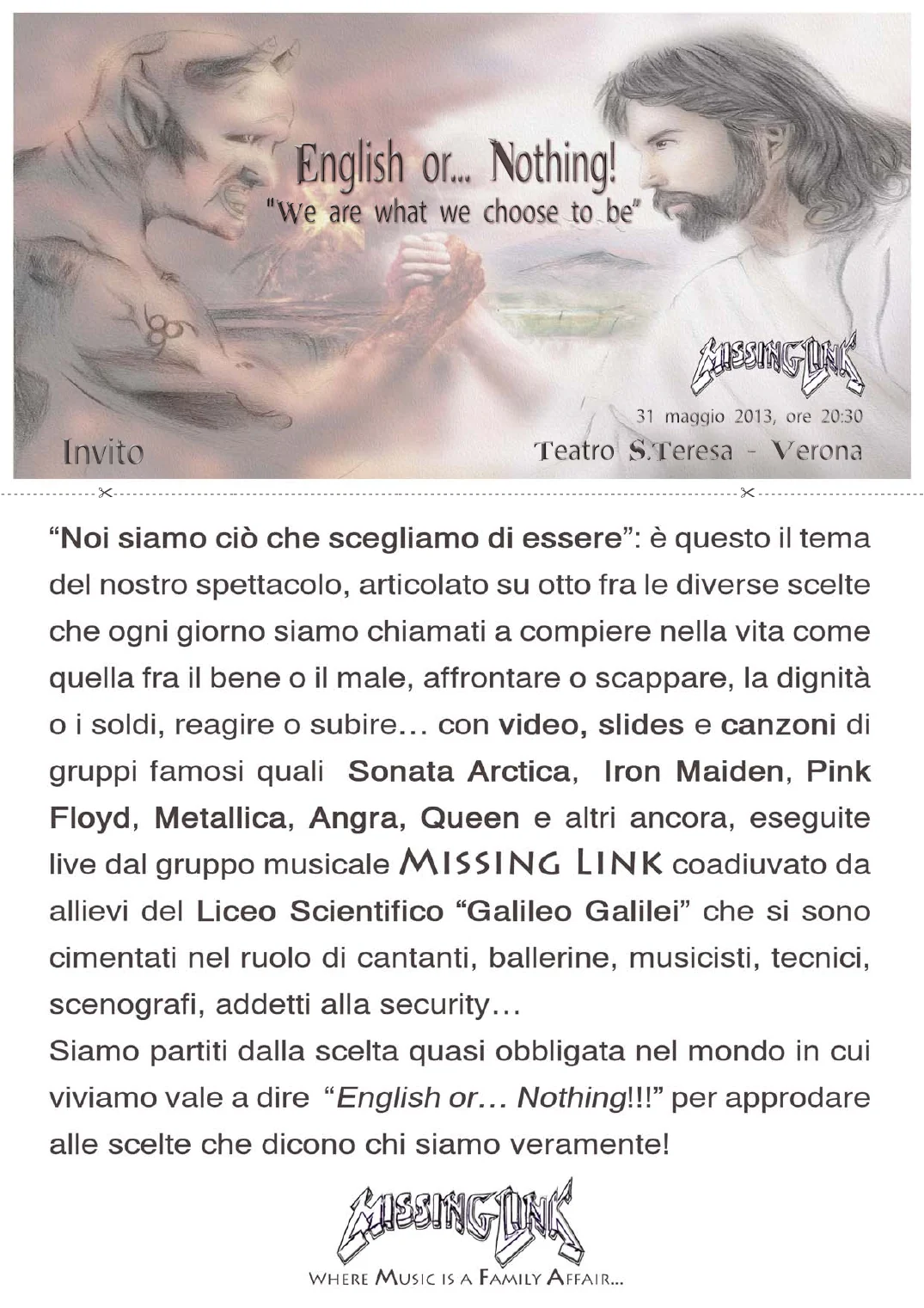
In 2013 that idea becomes a project with a name and a clear theme: We Are What We Choose To Be. The work starts from choices we face every day — good or evil, facing things or running away, dignity and money, reacting or giving in — and connects them with stories, people, films, art and music.
The result is neither a sequence of lessons nor simply a concert: what begins in the classroom is transformed into a show built together.
The materials prepared for the 2013 edition reveal a journey through videogames, comics, literature, cinema, art and distant cultures, each time meeting music along the way.
Hironobu Sakaguchi and Motonori Sakakibara, the world of Final Fantasy and Bring Me to Life: good and evil, worlds to save and the possibility of changing the course of events.
Superheroes who are far from perfect, diversity, frailty and everyday fears. From the Marvel universe to Enter Sandman, looking at what makes us human.
Never Let Me Go, the value and purpose of life, meet The Wall and Another Brick in the Wall: education, control and freedom of thought.
Empire of the Sun brings war, loss, hope and dignity into the story; Metallica’s music amplifies their emotional weight.
A Clockwork Orange raises a radical question about good, evil and freedom of choice; Rebirth and Heroes of Sand accompany the reflection.
Fear lies at the centre of many of King’s stories and becomes the thread leading to Fear of the Dark: recognising it, moving through it and refusing to be ruled by it.
Pop Art, mass culture and consumption lead to Money: our relationship with wealth, ideals and the risk of making everything subordinate to what we own.
Culture, art, travel and encounters with difference lead to Journeyman: the journey as a metaphor for life, for opportunities taken and opportunities missed.
The 2013 production document lists 61 students in a wide range of roles. Not only singers and musicians, but also presenters, set designers, dancers, video and lighting technicians, choir and set directors, and security.
From its very first edition, English or… Nothing! was therefore a collective undertaking: the stage was only the visible part of a machine built by many people.
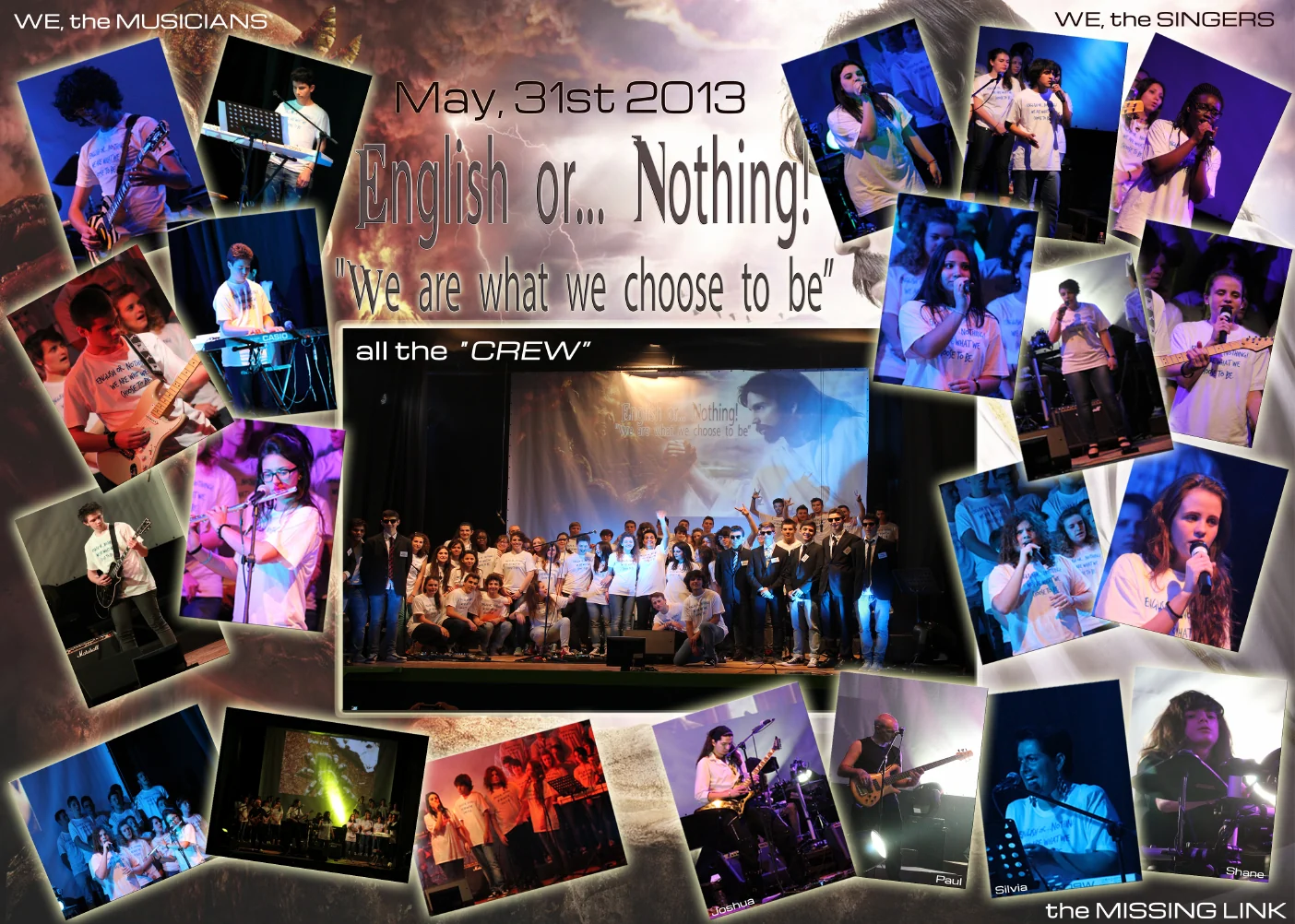
Musicians, singers, crew and Missing Link: an image created after the show brings together many of the faces and moments from that first evening.
The elements that would accompany the project in later years are already present in 2013: a central theme, classroom work, different languages and media meeting each other, live music, and students taking an active role both on and off stage. From 2014 onwards, each new edition would change its story and its form, but would begin from the same idea.